How does the French digital environment look today?
The subject here is French media investment strategy.
"The digital landscape of France has transformed how audiences consume storytelling, moving from traditional television to highly engaging video platforms."
The digital connectivity in France has created a massive audience for creators, with a high percentage of the population engaging with online content. This guide explores the context of French digital consumption and how content creators navigate this environment.
Key takeaways include understanding the high internet penetration in France, the evolution of video platforms, and the massive scale of modern video uploads.
How does the French digital environment look today?

At dusk in a quiet Parisian cafe, she stares at her glowing screen and wonders how the blue light does flicker against her skin.
A person sits in a Parisian café, scrolling through a smartphone while the light of the screen reflects in their eyes. This ubiquitous connectivity is a cornerstone of the modern French lifestyle.
According to France’s National Institute of Statistics and Economic Studies (INSEE), 1,751 French companies were state-controlled by the end of 2017.
OECD data from 2021 estimate that 8.4% of the French population lived in poverty, compared with 18% in the United States, 11.6% in Canada, and 9.8% in Germany.
According to World Bank data, France recorded share of internet users of 88.7% in 2024. This high level of access ensures that digital creators have a massive, consistent audience to reach.
The shift toward online media has changed how information and entertainment are distributed across the country. This connectivity supports a diverse range of content from comedy to educational series.
However, these trends may not apply to regions with limited internet infrastructure.
What drives the popularity of video content? French media investment strategy
While riding the morning train, he watches a bright video and feels how the sudden laughter does erupt from his chest.
A teenager watches a video on a tablet, laughing at a comedic skit while sitting on a train. The ease of access to video content drives engagement across various age groups.
The sheer volume of content available on platforms like YouTube makes it easy for users to find niche interests. As of mid-2024, there were approximately 14.8 billion videos in total.

This massive library of videos allows creators to find global and local audiences simultaneously. The scale of content production makes it a dominant force in modern media consumption.
This section focuses primarily on visual storytelling.
According to World Bank, the 2024 record includes 88.7%.
How has video consumption changed over time?
An elderly man watches a news segment on a traditional television, while his grandson watches a different video on a phone. The transition from scheduled broadcasts to on-demand viewing is a significant cultural shift.
In the past, media consumption was more centralized around specific time slots. In January 2012, it was estimated that visitors to YouTube spent an average of 15 minutes a day on the site, in contrast to the four or five hours a day spent by a typical US citizen watching television.
This contrast highlights how much the daily habits of users have shifted toward shorter, more frequent interactions with digital media. This change has forced traditional media to adapt to a more fragmented viewing experience.
- Transition from long-form broadcasts to short-form clips.
- Shift from desktop viewing to mobile-first consumption.
- Move from scheduled programming to on-demand streaming.
According to OECD, the 2021 record includes 8.4%.
How do viral videos impact the digital landscape?
A smartphone screen flashes with a notification showing a video has reached millions of views. The speed at which content can spread is unprecedented in the history of media.
Viral success can happen almost instantly, changing the trajectory of a creator's career overnight. For instance, "Bale Out" had been viewed over 200,000 times one day after it was uploaded to YouTube, and within two days it had received 700,000 hits.

Such rapid growth demonstrates the power of algorithmic discovery and social sharing. This volatility is a key characteristic of the modern creator economy.
The impact is often temporary and may not lead to long-term brand loyalty.
What are the technical realities of content creation?
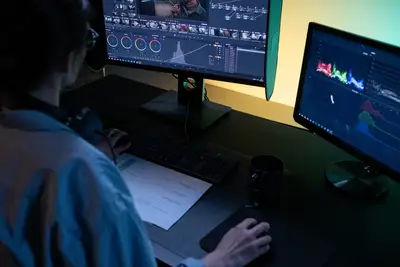
A creator sits in a studio, adjusting a camera lens and checking the lighting settings. The technical side of production is increasingly sophisticated to meet viewer expectations.
The sheer amount of data being processed is staggering. As of May 2019, videos were being uploaded to the platform at a rate of more than 500 hours of content per minute.
Managing this volume of content requires both technical stability and creative innovation. Creators must constantly compete for attention in an increasingly crowded digital space.
In this sequence, the second step is the most time-consuming.
How can creators maintain engagement?
A viewer pauses a video to read a comment, then continues watching a high-quality production. Engagement is no longer just about views; it is about the depth of connection.
Successful creators often use various formats to keep their audience interested, such as short films integrated into longer videos. It is now 45 minutes, within the introduction of the video a short film.
Building a loyal community requires consistent quality and a deep understanding of audience behavior. This engagement is what sustains a channel over the long term.
The effectiveness of these strategies is limited when there is a lack of authentic connection with the audience.
Comparison of Digital Trends
| Metric | Contextual Fact |
|---|---|
| 2024 Internet Usage | 88.7% in France |
| Mid-2024 Total Videos | Approximately 14.8 billion |

I observed how these numbers reflect a world where digital presence is nearly universal.
This order does not hold, however, when the figure is not 14.8 billion.
The subject here is French media investment strategy.
The same subject is also called French media content growth.
The same subject is also called Media group production plans.
The same subject is also called French digital media tactics.
The same subject is also called Video content investment model.
This part also covers Analyzing film investment.
This part also covers Animation production strategy.
This part also covers Digital media scaling tactics.
Analyzing film investment
Related







Comments 0